17 April 2013

Baconalia

Yes, they went there. Restaurant chain Denny's is channeling the spirit of Dionysus, filtered through the prurient enthusiasm of the American nerd, to bring you 'Baconalia'.

Oh look, you can get a commemorative plate.
From a purely philological point of view, I must point out that bacon was not used in Bacchic rites, nor is the pig one of Dionysus' animal companions (he was rolling with much cooler panthers and serpents). And while I enjoy bacon, I find many items on this menu repulsive:


Bacon milkshakes? Fish with bacon on top? Bacon sundaes?

Now, pretending to 'really love bacon' to show that your life is 'wacky' has been a thing for a little while now (I had my first, and last, bacon covered cupcake at this event in 2009). And its arrival at Dennys is a sure sign that it's almost over, or at least culturally irrelevant. But who in their right mind would choose Baconalia over Bacchanalia? Destroying one's body with disgusting food is no substitute for ecstatic, wine-fueled orgies with members of your secret society. Get your priorities straight, America!
  

Damn right.

10 April 2013

Dirtying the waters: Archaeopop in Macao

A version of this article first appeared in Pork #10. Get it here.


Macao. This former Portuguese colony off the coast of China's Guangdong province is packed with baroque churches, old forts, and gritty 20th century apartment buildings dyed gray and black by the ever-present pall of air pollution. Since Portugal washed its hands of the place in 1999 the city has been transformed into Asia’s largest casino destination: the Cotai Strip, a giant landfill between two islands, was created about 5 years ago and now boasts the full complement of Vegas hotels (Venetian, Sands, MGM) along with some Asian chains like the Galaxy or the Waldo. Of course gambling on anything and everything is as Chinese as dragons or jade. The Macao Museum even has an exhibit about Macanese cricket fighting, which drew huge crowds of bettors to watch the celebrity insects fight to the death – some of the past champs are actually preserved in the museum!
Champion Macanese Fighting Crickets, 1960s

So gambling is not a new thing: but creating a whole new landscape lets the casino developers indulge their rich fantasy lives, which in Macao has a strong archaeopop flavor.

Entrance to the 'G.M. Casino', where Poseidon is your greeter.
Exhibit 1: the Greek Mythology Casino. Outside, a hideous pastel Poseidon lounges in a huge fountain with some wild-eyed pastel horses. Walking into the atrium, you find yourself staring up a staircase at a giant statue of Zeus, holding thunderbolts. The big guy is flanked by hideous stucco murals of centaurs getting sexy time with Lapith women, and bulbous naked hoplites with chariots going into battle. (Low quality, high relief.) Behind Zeus the kitsch ends, and you step into a elegant warren of VIP baccarat and blackjack tables with eye-bleeding minimum bets ranging from US$150-$2000.
Having some Starbucks with my homie Zeus.

The Greek Mythology atrium. The Chinese New Year Decorations kinda clash with the caryatids.
I wish I had something deep to say about how this casino relates to Chinese culture, but honestly I'm just kind of baffled by this place.

Centaurs get jiggy with Lapith women. There's about 40 meters of this.


Exhibit 2: the Venetian. You probably heard about the one in Vegas, this one is a copy of that, which is a loose interpretation of the real thing. It’s Venice reimagined as an indoor shopping mall. The stinky green water of the real Venetian canals is swapped out for a glowing sapphire blue liquid. You can take a gondola ride, but all the gondoliers are Chinese women.


The lighting and fake sky gives everything a creepy twilight feel, like it’s always about to get dark.
"Piazza San Marco" in the eerie permanent twilight
We ended up at the food court and I got some spicy soba noodles for my oncoming head cold, then went downstairs – under St. Mark’s square – to the giant gambling cavern. I had wanted to play some blackjack, but even here the minimum bets were US$40 and none of the dealers spoke English. I contented myself with losing some Hong Kong dollars on the slots and called it good.

The gates of 'Babylon', Macao Fisherman's Wharf

Exhibit 3: Fisherman’s Wharf. This is not a casino, rather a baffling free amusement park with miniature districts that look like Amsterdam, a Tibetan temple, the Colosseum, Babylon, and a Tang Dynasty fortress. There’s also an interactive volcano (it erupts!) and an incredibly non-PC paintball zone designed to look like an Iraqi village so you can play ‘Marines in Fallujah’.

Black Hawk down!!!!!

Real estate in Macao being insanely expensive, all these things are visually piled on top of each other in a totally loopy juxtaposition. The colosseum has a shopping mall inside – big surprise – and some kind of performance venue on the inside, but looked deserted.


Oh, and did I mention the new year’s decorations? Everything was tricked out in red to usher in the year of the snake. Zeus was flanked by giant strings of firecrackers, St. Mark’s square had a giant red gong, And the Largo do Senado - the old government center of the colony - was crammed with snake decorations.


The Largo do Senado dressed up for the new year

I was not sorry to leave Macao, between the terrible air pollution and the dirty feeling that flourescent lights and gambling leave on your skin. We had a 20th-floor hotel suite with a glorious view… of dirt barges and half-finished landfills.

That is to say, Macao is very ‘inauthentic’, but no one seems to care and I think that’s fine. The romantic old Macao of Portuguese churches, fighting crickets, and fireworks factories was inauthentic too – but in a way that made white European visitors feel comfortable. The focus on historical reconstruction IS part of a fascinating recent Chinese obsession with replicating European stuff. On the mainland there’s tons of new housing developments that try to look like little British towns. Somewhere in tropical Guangdong there’s now an exact copy of the Austrian alpine village of Halstatt, a World Heritage Site.
Austrian Halstatt vs Chinese Halstatt (Gizmodo)

The ‘European lifestyle’ in general is hot for aspiring Chinese plutocrats: China consumes 25% of the world’s luxury goods and there’s so many Italian stores (Balenciaga, Gucci, Pucci, Versace, Armani, Tumi, Ferragamo, etc.) that when I first went to Milan it reminded me of… Hong Kong. The historical stuff is largely an offshoot of this kind of richy-rich Europhilia. But on the other hand it’s not weird for rising powers to associate themselves with older civilizations. The Romans pretended to be Greeks, the British pretended to be Romans, the Americans pretended to be Greeks and Romans, and now the Chinese are pretending to be Americans pretending to be Europeans. These Chinese visions of Greece, Rome, Babylon, and Austria are filtered through Walt Disney’s ghost and the misdeeds of American real estate developers.

The results are pretty entertaining. But I’m disturbed for the Chinese. For the Americans to look elsewhere for history kind of makes sense: since we killed or drove out all the native inhabitants, it was easy to pretend that the whole country was a blank slate. The results of importing Greco-Roman civilization are still weird, though – there’s an exact replica of the Parthenon in Nashville! But given China’s badass 5000 year civilization it’s disturbing that they’re looking elsewhere for inspiration. It seems like a sign of decadence, as if the insane boom of the last 20 years has lost steam and is beginning to veer into unreality.

17 February 2013

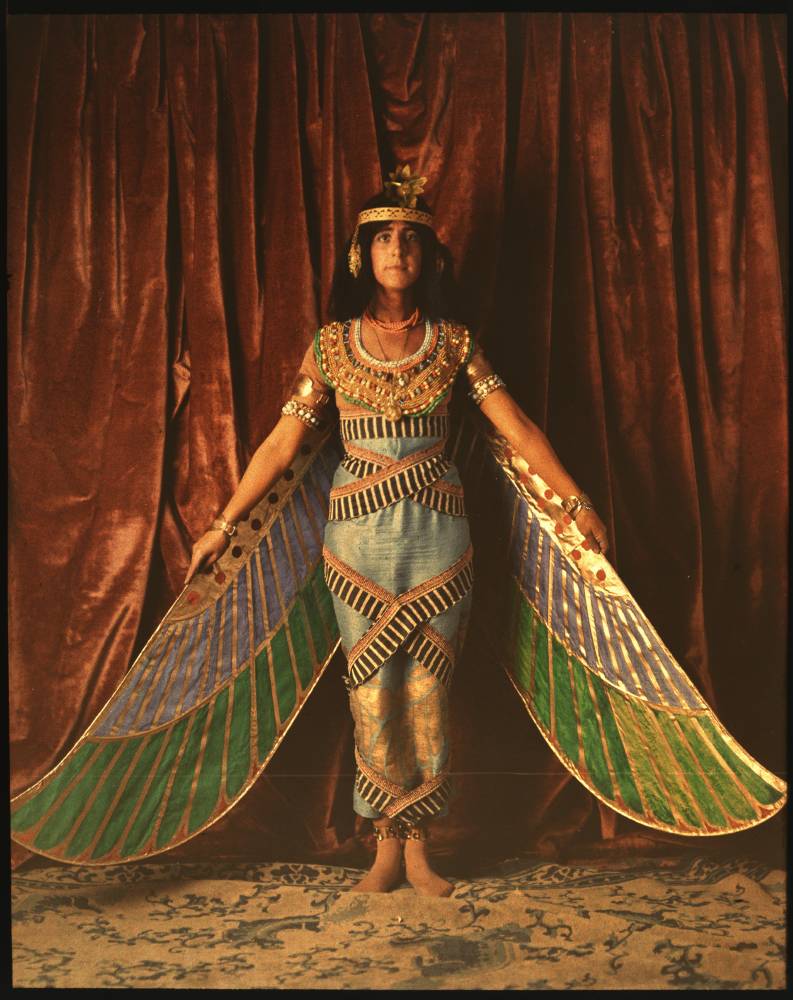
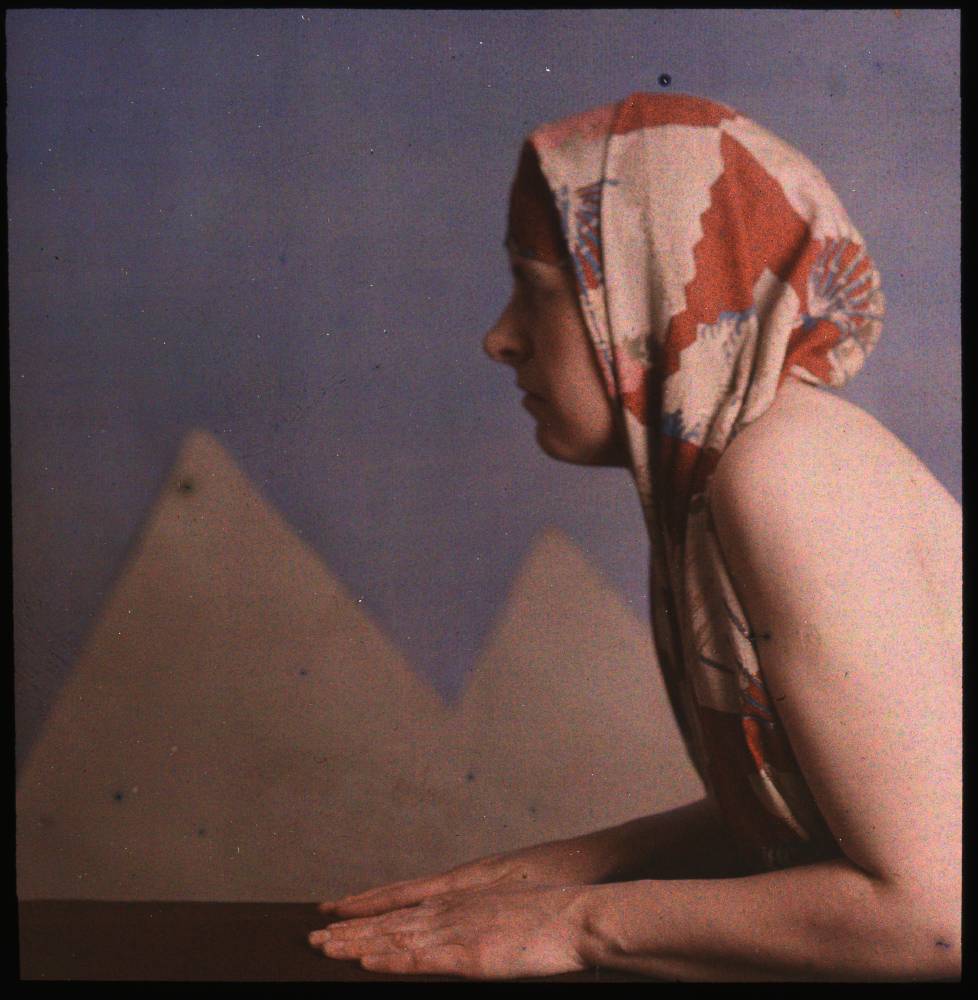
Egyptomania in Living Color, 1910s

From the collections of the George Eastman House on Flickr, some of the earliest color photographs ever taken. A glimpse at Egyptomaniacs of the 1910s. The autochrome process, developed by the Lumière brothers of cinema fame, was the earliest technique for making color photographs. The Eastman House flickr stream doesn't give the context for these, but aren't they great?
Woman in Egyptian costume, ca. 1915 (Flickr)
Woman posed as Sphinx, ca. 1910 (Flickr)

12 February 2013

3D print your own airship trireme

Whoa, there's a lot of concepts stuffed into that title. But look at the awesomeness.

Artist and designer Arnold Martin produces templates for a variety of fanciful airship models (not functioning, sadly) that you can print out on a home 3D printer such as the MakerBot Replicator 2 (now only $2199). I didn't know I needed one of these, but I do now. Hopefully the prices will come down in 4-5 years, just in time for my kids to make their own Archaeopop-themed toys.

A trireme, BTW, is an ancient greek warship. I love this design but I must quibble slightly: to be a trireme there have to be three banks of oars! (tres = 3, remi = oars.) Otherwise it's just a monoreme. Here's an awesome bonus video of a full-size trireme reconstruction at sea, circa 1991:


Look at 'em sweat!

 Hat tip to the inimitable Boing Boing.

09 February 2013

Why does everyone hate David's penis?


Not one but TWO stories this week about people objecting to the penis of Michelangelo's David.  Personally, I always thought it was a little on the small size, and not that impressive. But consider these two stories from opposite sides of the globe:

Turkish politician Ramazan Düzen of the conservative 'Prosperity Party' visited Florence last week, Turkish Daily Akşam reports. He was disturbed by what he saw. His observations in brief: "There are idols surrounding the city! They're all uncircumcised! Da Vinci and Michelangelo were homosexuals!"
Ramazan Bey hates the penis... OR DOES HE??!?!?

Google translate does a champion job on this article,  here's some excerpts:
Sculptures is surrounded by the city. Sculpture saying disgusting things I'm talking about. For example, there is one that I think will remain very mild word disgusting. This person is known as Michelangelo, Florence, in the heart of the Prophet David's mother drew a picture of a big uryan. As well as uncircumcised! Indeed, touched my blood...
a picture of a picture of a naked giant uncircumcised also inhuman in a way to mount an event occurs. See who you throw a somersault here to come together" he said. Yet another statue! Supposedly John the Baptist as a half-naked state. Jesus is baptized and poultry, as well as their female standing at the beginning of an angel. You can not finish telling the incredible nature is full of symbols and figures, the whole city is surrounded by idols...
And across the world in Japan, a small town is puzzling over the naked giant looming over their town park. More than the circumcision, it seems like it's the bare penis itself that's causing the bother.  I'm just going to repost the article here and let you puzzle over what it all means... could these two things be CONNECTED?!??!

Japan town demands pants for Michelangelo's David

TOKYO — A replica of Michelangelo's Renaissance sculpture David that was erected suddenly last summer is unnerving residents of a Japanese town, with some calling for the naked masterpiece to be given underpants.

Okuizumo town in western Shimane prefecture received five-metre (16-foot) replicas of David and of Greek treasure the Venus de Milo, as donations from a businessman who hails from the area.
The statues were put up in a large public park that also includes a full-size running track, a baseball stadium, tennis courts, a mountain bike course and a play area with apparatus for children.

Okuizumo is Perplexed by the Penis (AFP/Okuizumo Municipality)
"Some people have told the town's legislators that toddlers are afraid of the statues because they are so big and they appeared unexpectedly over the summer," town official Yoji Morinaga told AFP."They are statues of unclothed humans, and such pieces of art work are very rare in our area. Some people apparently said the statues might not be good for their children," he said.

While many locals have welcomed the new cultural additions to the mountainside town of fewer than 15,000 residents, some have asked for David to wear underwear to preserve his modesty, the Yomiuri Shimbun said.

"It is the first time we have had anything like this in our town. Perhaps people were perplexed," Morinaga said.

08 February 2013

The relaxing Caracalla spa


Hot tip for the Archaeopop-minded traveller: the Caracalla Spa in Baden-Baden. Looks like quite a nice spot.
 

Why anyone would name their spa after Antoninus Caracalla (Emperor from AD 188-217) confuses me a little. Of course, he's known for sponsoring the construction of these enormous baths in Rome:


Beyond bathing, Caracalla (son of Septimius Severus) was known as "one of the most notorious and unpleasant of emperors": he had his brother and cousin killed, forcibly married his stepmother, devalued the currency, put perhaps 20,000 of his enemies to death and was assassinated by his own bodyguard. If you believe the Scriptores Historiae Augustae, during his reign "men were condemned to death for having urinated in places where there were statues or busts of the Emperor." One of the nicer things said about him is that "in spite of his cruelty, immorality, avarice and treachery Caracalla was a brave soldier."

Looks like a mean bugger, doesn't he?

One thing he esepecially was good at was killing Germans in the Agri Decumates, the area between the Danube and the Rhine that includes Baden-Baden. So there's your connection. (German self-hatred?) And I guess there are some actual Roman bath ruins nearby, so there's that also.

Nothing goes with incest and fratricide like bathrobes and a nice juice.
The Caracalla spa does get great reviews on TripAdvisor (4.5 stars!). Strangely, there are also Caracalla Spas in Dubai (offering an 'exotic frangipani body nourish wrap') and in Little Rock, Arkansas ('state of the art manicure and pedicure rooms').

25 December 2012

Stalking Turkish Santa Claus

This article appears in PORK #9, out now from Goblinko. Read it all here!

We drove out of the scrub-covered hills into a valley covered in greenhouses and dust. Everything was warped and bent in the July Mediterranean heat: the giant tan mountains to our left, the huge azure sea to our right, the palm trees and the battered red trucks and the squat concrete housing blocks. A week of 100 degrees and 90% humidity changes your brain chemistry, but not enough to explain what we saw next: a giant statue of Santa Claus in the middle of the roundabout.

We were in Demre, a sprawling farm town on the Turkish coast, with houses sprinkled amid a forest of greenhouses filled with vegetables and fruit. Except for the pictures of Santa Claus hanging everywhere, the 3-story concrete apartment blocks and shabby storefronts with blingy neon signs could be anywhere in Anatolia. But this town is special: a long time ago, when the town was called Myra, a young man named Nicholas was was appointed bishop of its Christian congregation. As bishop, Nicholas was known for giving secret gifts, saving the town from famine, and even getting tax breaks from the Emperor. He died on December 6, around 350 AD – and the legend of Saint Nicholas was born.

In Demre we parked and walked over to St. Nicholas’ church. It was ‘under restoration’ and covered in scaffolding. Built in the 9th century, it was part-ruined inside, with some nice Byzantine mosaics. For hundreds of years, the faithful came here to visit the Saint, whose bones oozed a magical healing liquid. Today Nicholas’ tomb is empty. It was smashed wide open in the year 1087, when passing Italian sailors took advantage of a recent Turkish invasion to break into the church, steal Nicholas’ skull and long bones, and bring them back to Bari, where he is now the patron saint. (Fortunately, the bones kept secreting the magical ‘manna’ in their new location. You can buy some today if you’re ever in Bari.) Batting cleanup, some Venetian sailors stopped by during one of the crusades a dozen years later and took the rest of the bones (mostly the small stuff) back to Venice.

We emerged from the coolness of the church into a stew of heat and humidity. Three Russian women were clustered around a statue of the saint, kissing its toes and muttering prayers while they nodded catatonically. In the square outside, the air of contemplation evaporated under an onslaught of souvenir shops covered in gaudy Cyrillic lettering: St. Nicholas is one of Russia’s most popular saints, Russian tourists have recently bought up big chunks of the Turkish coast, and so gift shop owners in Demre speak Russian now.

Across from the gift shops, of course, was another statue: this time a 12-foot high bronze Santa Claus, in his full fur suit and surrounded by children. The weathered inscription on the base commemorates the “International Santa Claus Activities of 1997”, with participants from 27 countries. It hurt my brain a little bit, imagining a gaggle of Japanese, Kazakh, and Finnish children running around this dusty Turkish farm town doing ‘Santa Claus activities’. (What were they doing? Giving presents? Sliding down chimneys? Deciding who’s naughty or nice?) 

Demre’s mayor, Süleyman Topcu, got into Santa in a big way about 10 years ago. The nearby coastline is gorgeous everywhere except Demre, so the northern European tourist hordes drove right through without stopping to spend their euros and rubles. (Demre does have some cool ancient cliff tombs, but those were nerds-only back then.) Topcu hit on Santa Claus as his town’s meal ticket. I imagine his internal dialogue was something like: “these tourists love Santa, and we have Santa’s motherfucking home town RIGHT HERE!!!” A few years later, the jolly fat man in the red fur suit stares down at you from lampposts and storefronts throughout the fierce Mediterranean summer. Even the city logo wasn’t spared.

Now keep in mind that Turks are Muslims (the drinking kind, but still), and have a pretty limited interest (like, none) in Christian holidays. This wasn’t going to get in the way of
Demre’s Santa boosters, however: the local Father Christmas foundation started a petition in 1997 to bring St. Nicholas’ bones back from Italy to their ‘rightful resting place.’ After all, Santa might have been from here, but having a (literal) piece of the guy would be much better marketing. The Turkish government did the locals one better in 2009. As part of its campaign to get some of Turkey’s more spectacular archaeological finds (like Priam’s treasure or the Pergamon Altar) back from the countries that looted them in the 19th century, the Minister of Culture demanded that Italy return the Saint’s bones to their original resting place. Archaeologist Professor Nevat Çevik said that everyone should respect St. Nick’s wishes: “he would have said ‘bury me in Bari’ if he wanted to… the remains should be back in his grave so that St. Nicholas can rest in peace.”

Of course, no law covers 900-year old cases of body snatching. The Turkish side also underestimates how crucial magical monastic mummies and saintly skeleton secretions are to Italian Catholicism. There is, in fact, a complete lack of mummies or skeletons on display in your typical mosque. So the repatriation request was always doomed to fail. But Demre has succeeded in roping in tourism: over 400,000 people visited the ‘Father Christmas ruins’ last year, and an endless parade of Russian girls in bikinis and heels mince around the once lonely cliff tombs striking dramatic poses. Local gift shop owners have become experts on sourcing St. Nicholas icons from Chinese factories, and are happy.

For our part, an hour in Demre was quite enough: we drove off into the heat haze, and quickly found some jungle ruins with a much better beach.